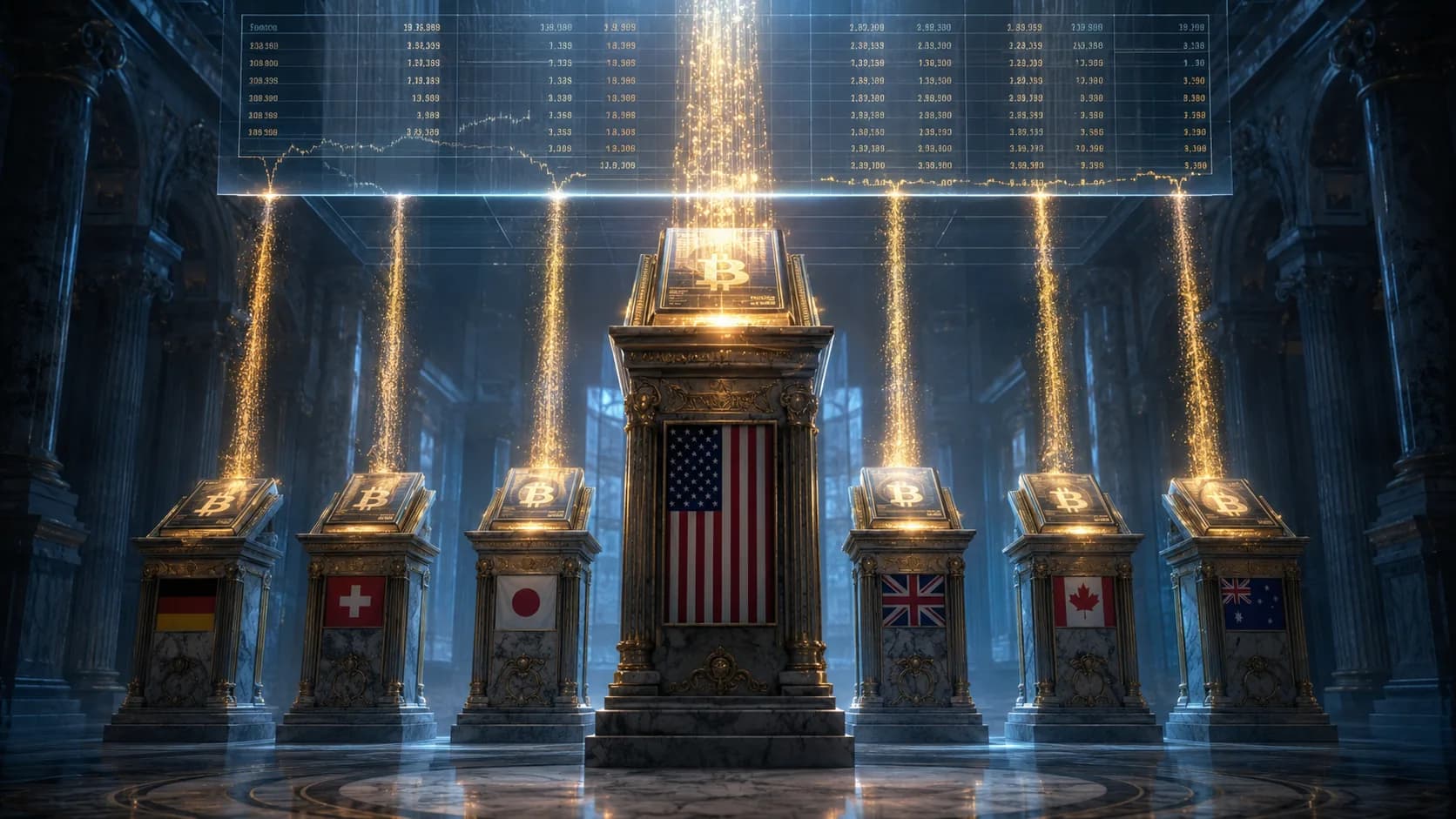
S&P Global Ratings assigned BlackRock's tokenized money market fund, BRSRV, its highest principal stability rating of "AAAm," according to a filing surfaced by CoinMarketCap on August 6, 2026. The agency cited the fund's creditworthiness and its management of counterparty risk. It is the first time a major rating agency has placed a tokenized fund on the same shelf as the safest traditional money market funds.
The rating matters less for what it says about BlackRock and more for what it signals about the plumbing. An "AAAm" is the top of S&P's principal stability scale, the grade normally reserved for prime money funds that institutional treasuries park cash in overnight. Handing that grade to a fund whose shares live on a blockchain closes a gap that has slowed institutional tokenization for two years: the absence of a familiar risk label that a corporate treasurer or a regulated fund can actually act on.
A rating scale that predates blockchains
Money market funds are graded on principal stability, or how likely the fund is to hold its value and meet redemptions. The "m" suffix marks the scale as separate from S&P's long-term credit ratings. An AAAm fund is expected to maintain a stable net asset value under stress and honor redemptions without gating. Those are the exact properties institutions worry about when the underlying share is a token rather than a line in a transfer agent's ledger.
By rating BRSRV the same way it rates a conventional Treasury fund, S&P is making a specific claim: the tokenized wrapper does not, in its view, degrade the fund's principal stability. The assets behind the token, short-dated government paper and cash, are the same instruments that have always earned the top grade. The token is a distribution mechanism, not a new asset class. That framing is what lets a treasury desk treat the on-chain version as a substitute rather than an experiment.
BlackRock's second act in tokenization
BlackRock is not new to this. Its BUIDL fund, launched with Securine in 2024, grew into the largest tokenized Treasury product by assets and became a settlement layer for other crypto firms holding idle cash on-chain. BRSRV extends that playbook into rated territory. The earlier product proved demand existed; a top rating from S&P is aimed at the institutions that could not touch an unrated on-chain fund no matter how large it grew.
The distinction is about mandate, not sentiment. Many regulated funds, insurers, and corporate treasuries can only hold instruments above a stated rating floor. An unrated tokenized fund is invisible to those buyers regardless of its underlying quality. An AAAm grade puts BRSRV inside the eligible set. That is a larger pool of capital than the crypto-native firms that seeded the first wave of tokenized Treasuries.
The context this lands in
Tokenized real-world assets have moved from pilot to product across the last year. Wells Fargo is preparing tokenized deposits on its own blockchain this fall, and the Bank for International Settlements has run tokenized settlement across six currencies under Project Agora. What most of these efforts lacked was an independent risk stamp that traditional allocators recognize. S&P supplying one for a BlackRock fund is the missing credential arriving for the largest issuer in the category.
Crypto markets were quiet as the news circulated. Bitcoin traded at $64,774, up 0.9% on the day, with Ether at $1,911, up 2.3%, as of August 6, 2026, per CoinMarketCap's snapshot. The Fear and Greed Index sat at 39, in "Fear" territory. Tokenized money market funds do not trade on sentiment the way spot crypto does; their appeal is a yield close to the risk-free rate with on-chain settlement, and a rating that lets compliance teams sign off.
The payment connection is closer than it looks
The connection to payments is closer than it looks. Stablecoin issuers and card programs increasingly hold reserves in tokenized Treasury funds rather than raw bank deposits, because an on-chain fund settles in the same environment as the tokens it backs. A rated fund gives those issuers a reserve asset with a recognized grade, which strengthens the backing behind stablecoin spending and the USDC and USDT balances many card users already spend from. The clearer the reserve quality, the easier it is for a card program to prove solvency to a partner bank.
None of this makes a tokenized fund a checking account. Redemption windows, smart-contract risk, and the credit quality of the token issuer still apply, and an AAAm rating speaks to principal stability, not to the operational risk of the chain itself. But the rating removes one of the last excuses conservative institutions had for staying out. For a market that has spent two years asking regulated money to treat tokens as legitimate, an S&P grade on a BlackRock fund is a concrete answer.
Overview
S&P Global Ratings gave BlackRock's tokenized money market fund BRSRV its top "AAAm" principal stability rating on August 6, 2026, the first time a major agency has rated an on-chain fund at that tier. The grade puts the fund inside the eligible set for regulated buyers who require a rating floor, extending BlackRock's tokenization push beyond the crypto-native firms that seeded the first wave. It also gives stablecoin issuers and card programs a rated reserve asset that settles on-chain, tightening the link between tokenized Treasuries and everyday crypto spending.