Bitcoin's network resolved a rare two-block chain reorganization on Monday after Foundry USA, AntPool, and ViaBTC simultaneously mined competing blocks at height 941,881. Foundry's chain ultimately won, orphaning two valid blocks and extending its lead to seven consecutive blocks.
The network handled it exactly as Satoshi designed. But the incident puts a spotlight on a less comfortable reality: mining concentration is increasing, and these splits will happen more often as fewer pools control more hashrate.
Twelve Seconds Between Two Valid Chains
At 15:49:35 UTC, AntPool found a valid block at height 941,881. Twelve seconds later, at 15:49:47, Foundry found its own valid block at the same height. Both were legitimate, and the network split, with some nodes following AntPool's chain and others following Foundry's.
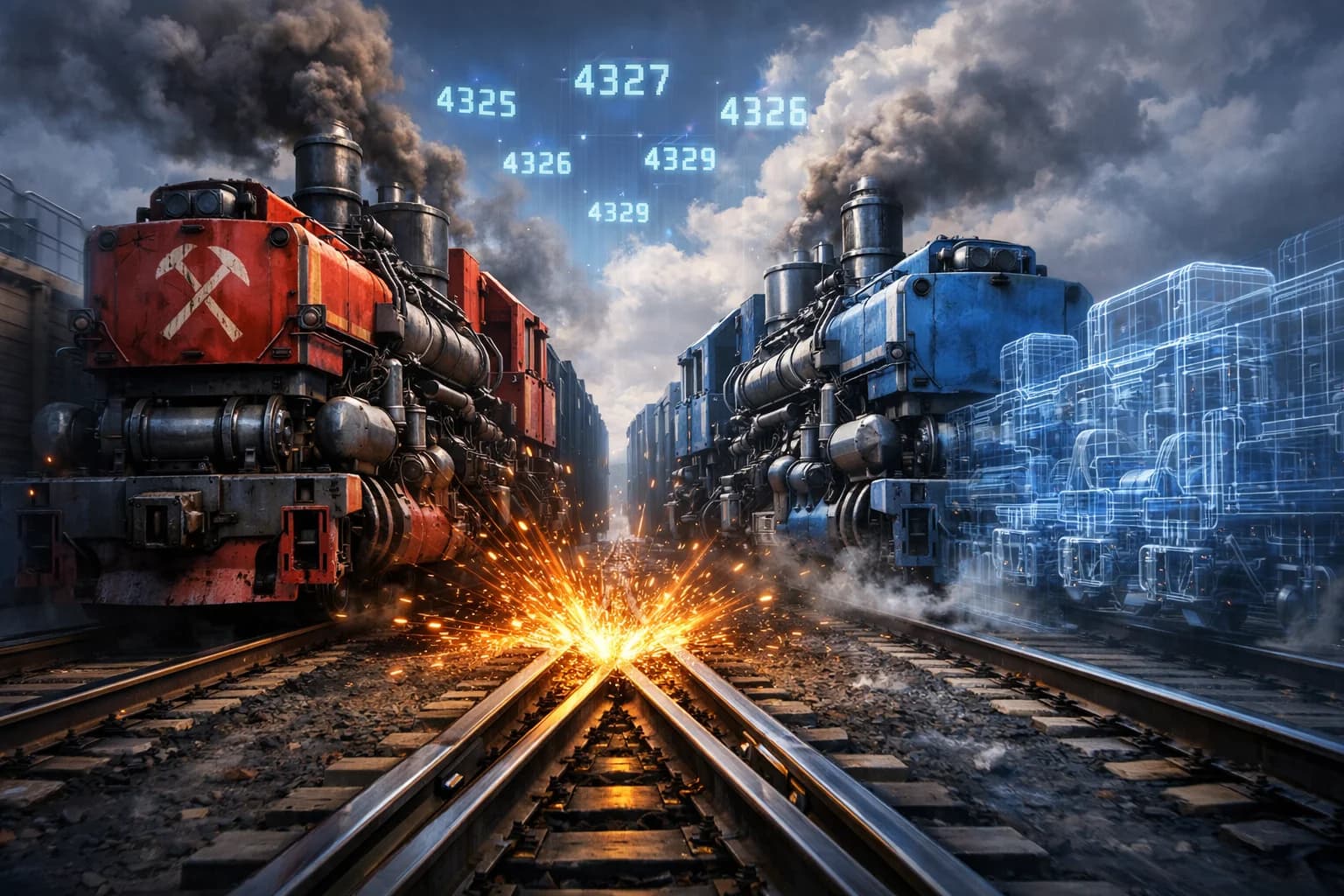
The race continued to block 941,882. ViaBTC extended AntPool's chain. Foundry extended its own. That created two competing chains, each two blocks deep, running in parallel across the network.
Then Foundry pulled away. Blocks 941,883 through 941,886 all went to Foundry, giving it seven consecutive blocks and making its chain the heaviest by a wide margin. The network discarded the AntPool/ViaBTC fork, and the two orphaned blocks dissolved.
Bitcoin researcher b10c confirmed the event: "We just had a rare-ish two block fork/reorg between Foundry and AntPool+ViaBTC."
No Transactions Were Lost
Any transactions included in the two orphaned blocks were not destroyed. They returned to the mempool and were picked up by subsequent blocks on Foundry's chain. For users, the reorg was invisible unless they were watching block explorers in real time.
This is how Bitcoin's consensus mechanism is supposed to work. When two miners find blocks at roughly the same time, the network temporarily forks, and the longest chain (measured by cumulative proof of work) wins. Single-block reorgs happen periodically. Two-block reorgs are considerably rarer because they require the competing chain to survive through an entire additional block cycle before the tie breaks.
No double-spend was involved. No attack was attempted. The protocol did its job.
The Mining Concentration Problem
The technical resolution is clean, but the underlying conditions that produced it are not. Foundry USA is Bitcoin's largest mining pool, and the fact that it mined seven consecutive blocks illustrates how concentrated hashrate has become.
Total network hashrate sits at approximately 920 EH/s as of March 24, 2026, down from the 1 zetahash record set in 2025. Mining difficulty dropped 7.76% on Saturday, the second-largest negative adjustment of 2026. And as covered last week, Bitcoin miners are currently losing approximately $19,000 on every BTC they produce, with an estimated production cost of $88,000 against a price of $71,136 (as of March 24, 2026).
These economics are squeezing smaller and mid-sized miners out of the industry. When they exit, their hashrate either goes offline or consolidates into larger pools. The result is fewer pools controlling more of the network, which increases the probability that a single pool will mine multiple consecutive blocks and create short-lived competing chains when blocks are found nearly simultaneously.
What a Reorg Does and Does Not Threaten
A two-block reorg does not threaten Bitcoin's security model. The six-confirmation standard that most exchanges and merchants use exists precisely because shallow forks are a known feature of proof-of-work consensus. No one relying on standard confirmation thresholds was at risk.
What it does signal is that the gap between the largest pools and everyone else is widening. If Foundry or any single pool approached 51% of hashrate, the calculus would change from "interesting but harmless" to "systemic risk." That threshold has not been crossed, but the direction of travel is clear: shrinking margins push consolidation, and consolidation produces more frequent reorgs.
For Bitcoin holders using crypto cards to spend BTC, the practical impact is zero. Card transactions settle through payment processors, not on-chain confirmations. But for anyone running a node, operating a mining pool, or building infrastructure that depends on block finality, Monday's reorg is a data point worth watching.
The Fear and Greed Context
The reorg landed during a period of broader market unease. Bitcoin's Fear and Greed Index sits at 34 (Fear) as of March 24, with BTC at $71,136 (-0.4% in 24 hours) and ETH at $2,161 (-1.4%). The mining profitability crisis, covered extensively over the past week, adds pressure. When miners are underwater, hashrate contraction accelerates, making the remaining pools more dominant and these events more likely.
Overview
Foundry USA mined seven consecutive Bitcoin blocks on Monday, orphaning two valid blocks from AntPool and ViaBTC in a rare two-block chain reorganization at height 941,881. The network resolved the fork as designed, favoring the chain with the most cumulative proof of work. No transactions were lost and no double-spend occurred. The incident underscores growing mining concentration as unprofitable conditions force smaller operators to exit, consolidating hashrate into fewer pools.